
Chicken Frizzle Gene DNA Test
A simple way to sort out frizzle, frazzle risk, and straight feather breeding plans.
This test helps you understand how the frizzle gene is moving through your flock so you can make more informed pairings and avoid preventable feather quality problems.
It is especially helpful for breeders working with frizzle projects, birds of unknown background, or lines where feather texture needs to be tracked more carefully.
Best for
- Frizzle breeding projects
- Birds with unknown feather texture background
- Keeping safer pairing records
- Sorting straight feather versus frizzle plans
- Reducing frazzle risk in future chicks
- Breeders selecting for better feather quality
This test currently applies to chickens.
Frizzle vs frazzle vs straight feather
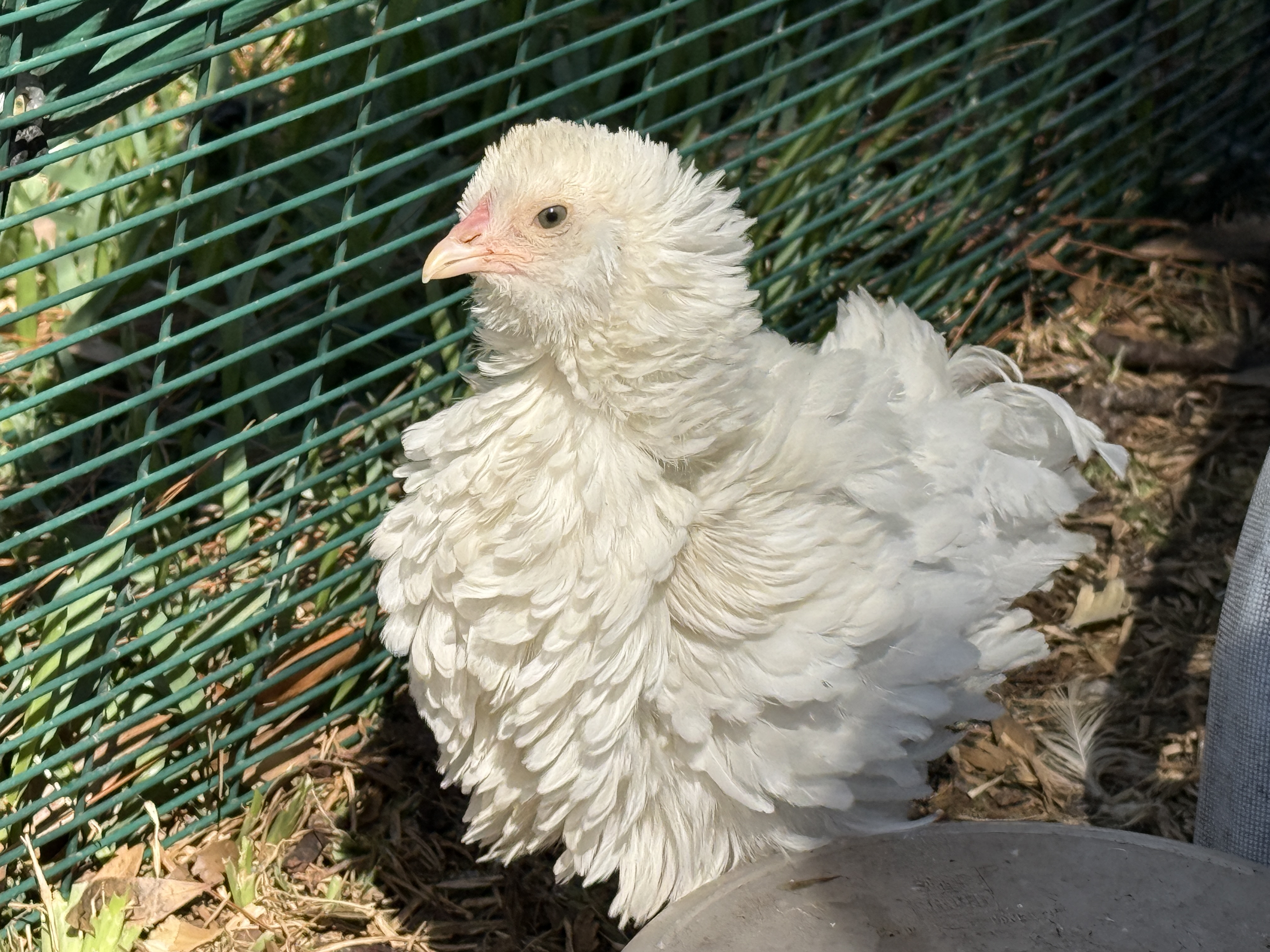
A straight feather bird does not carry the frizzle effect and grows typical smooth feathers. A frizzle bird has one copy of the frizzle gene, which causes the feathers to curl outward and create the classic frizzled look.
Frazzle happens when a bird inherits too much frizzle effect, usually from frizzle to frizzle pairings. Instead of a tidy curled feather, the plumage can become brittle, sparse, or poorly insulating.
In practical breeding terms, many breeders aim for frizzle paired to straight feather so the flock keeps the look they want without pushing into frazzle risk.
Frizzle to frizzle Punnett square
If both parents are frizzle, each parent can pass either a frizzle copy or a straight feather copy. That creates the classic 1 to 2 to 1 outcome.
| F | f | |
|---|---|---|
| F | FF Frazzle |
Ff Frizzle |
| f | Ff Frizzle |
ff Straight feather |
That means a frizzle to frizzle pairing can be expected to produce about 25% straight feather, 50% frizzle, and 25% frazzle.
This is why many breeders avoid frizzle to frizzle pairings and instead breed frizzle to straight feather to reduce frazzle risk.
Why frazzle is a health concern
Frazzle birds can have more fragile feather shafts, poorer insulation, and less protection from weather, scrapes, and normal wear. That means they may struggle more with cold, damp conditions, rough housing, and overall feather maintenance.
Because the feather cover may be thinner or weaker, these birds can need more management support than standard feathered or properly frizzled birds. The goal of testing is not just appearance. It is also to support more responsible breeding choices.
Supporting feather and flock health
Birds with delicate feathering often do best with strong nutrition and lower stress management. A high protein diet can support feather growth, while vitamins and essential minerals help the body maintain skin, feather structure, and recovery through molt.
Good overall support commonly includes balanced poultry feed, clean housing, protection from harsh weather, and attention to condition during molt or rapid growth. If a bird has especially poor feather coverage or recurring health concerns, a poultry knowledgeable veterinarian is the right person to involve.
Sample type
A tiny amount of blood on a triangle piece of coffee filter, printer paper or paper towel.
The sample dries quickly, travels well, and keeps the DNA stable for testing in our homestead lab.
Full step by step instructions are available on the How it works page.
Turnaround time
Most frizzle test results are ready within 1 to 3 days after samples arrive at Little Haven DNA.
You will receive email updates when samples are logged and again when results are ready to view inside your portal.