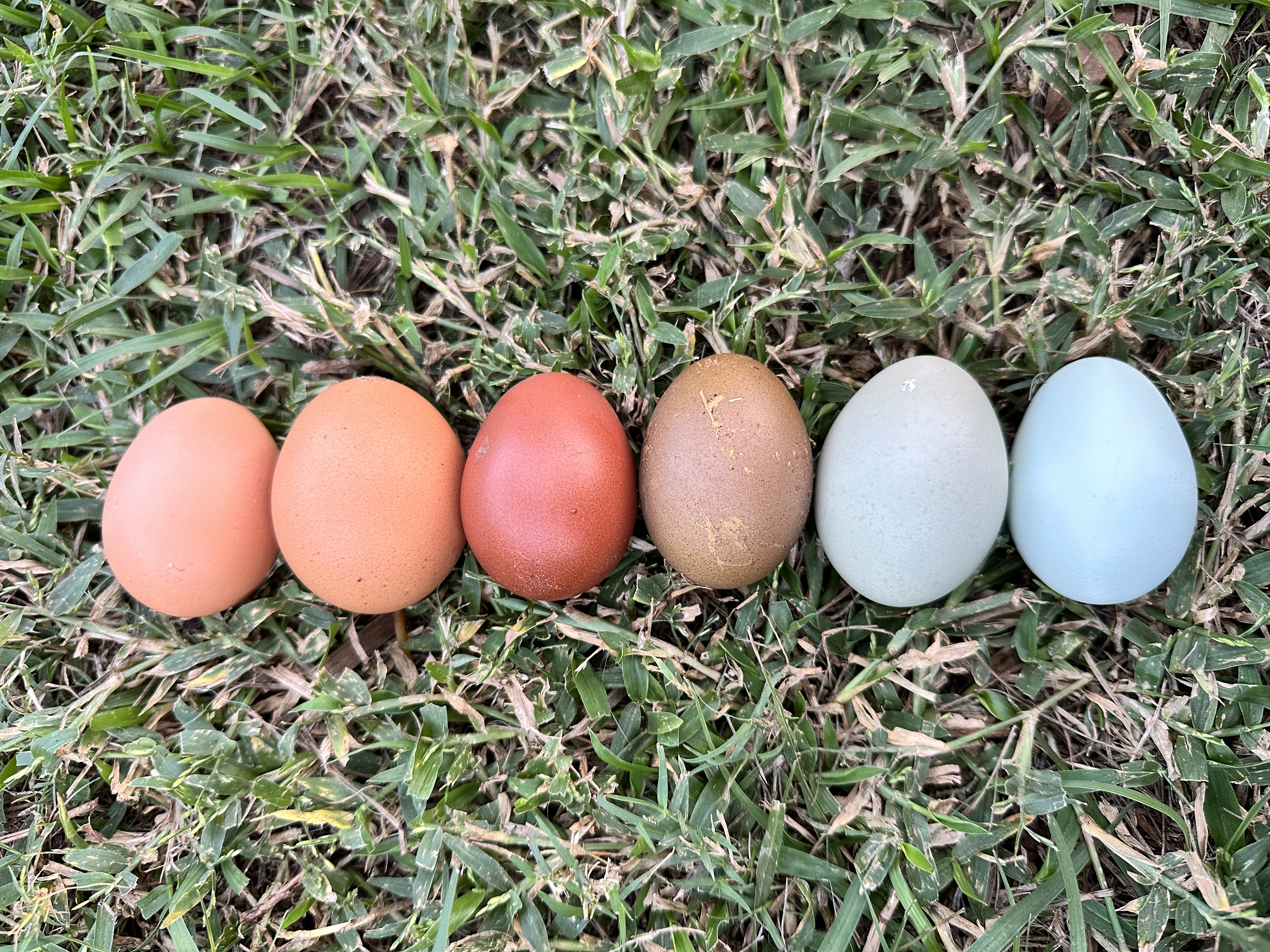
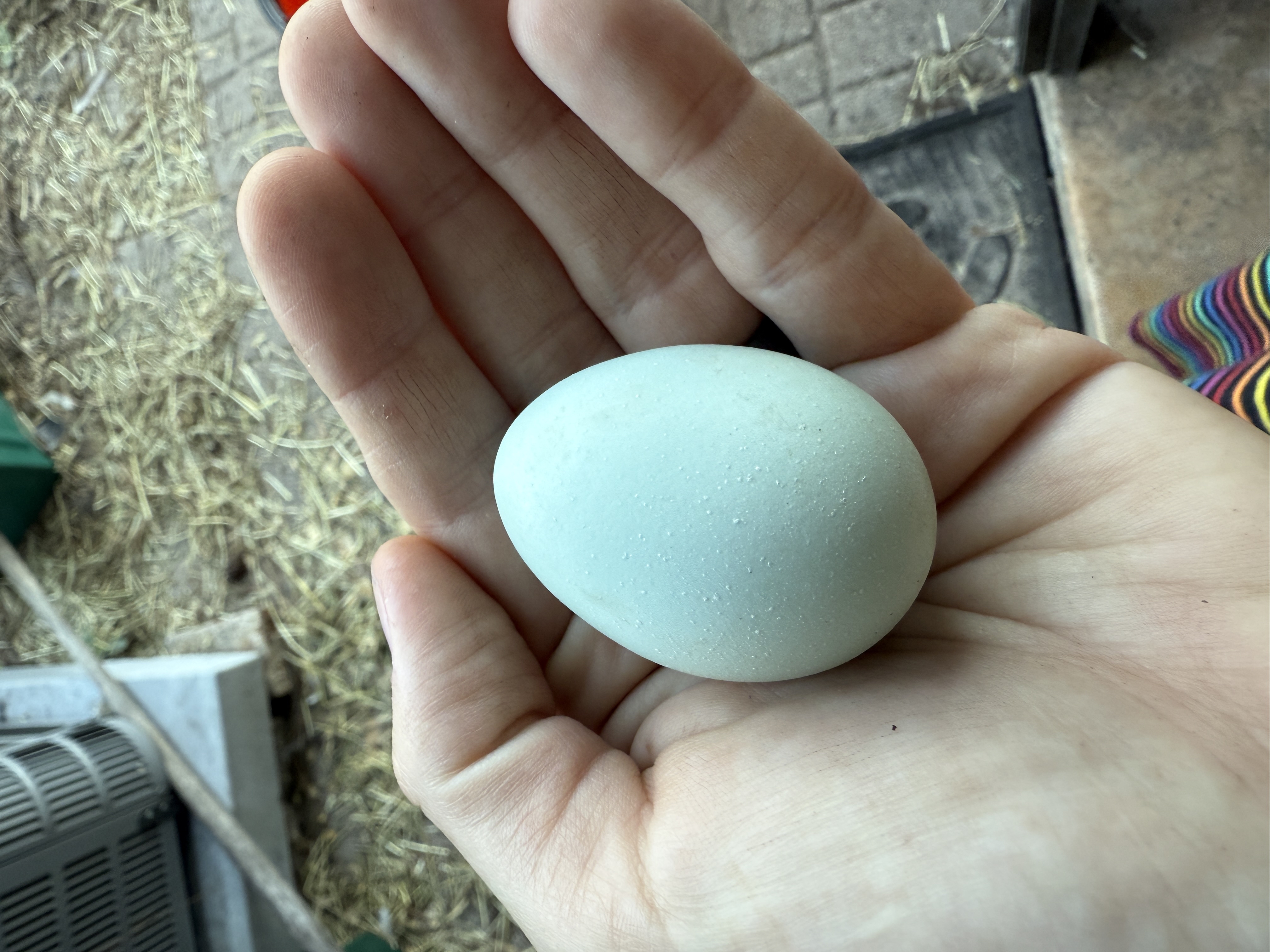
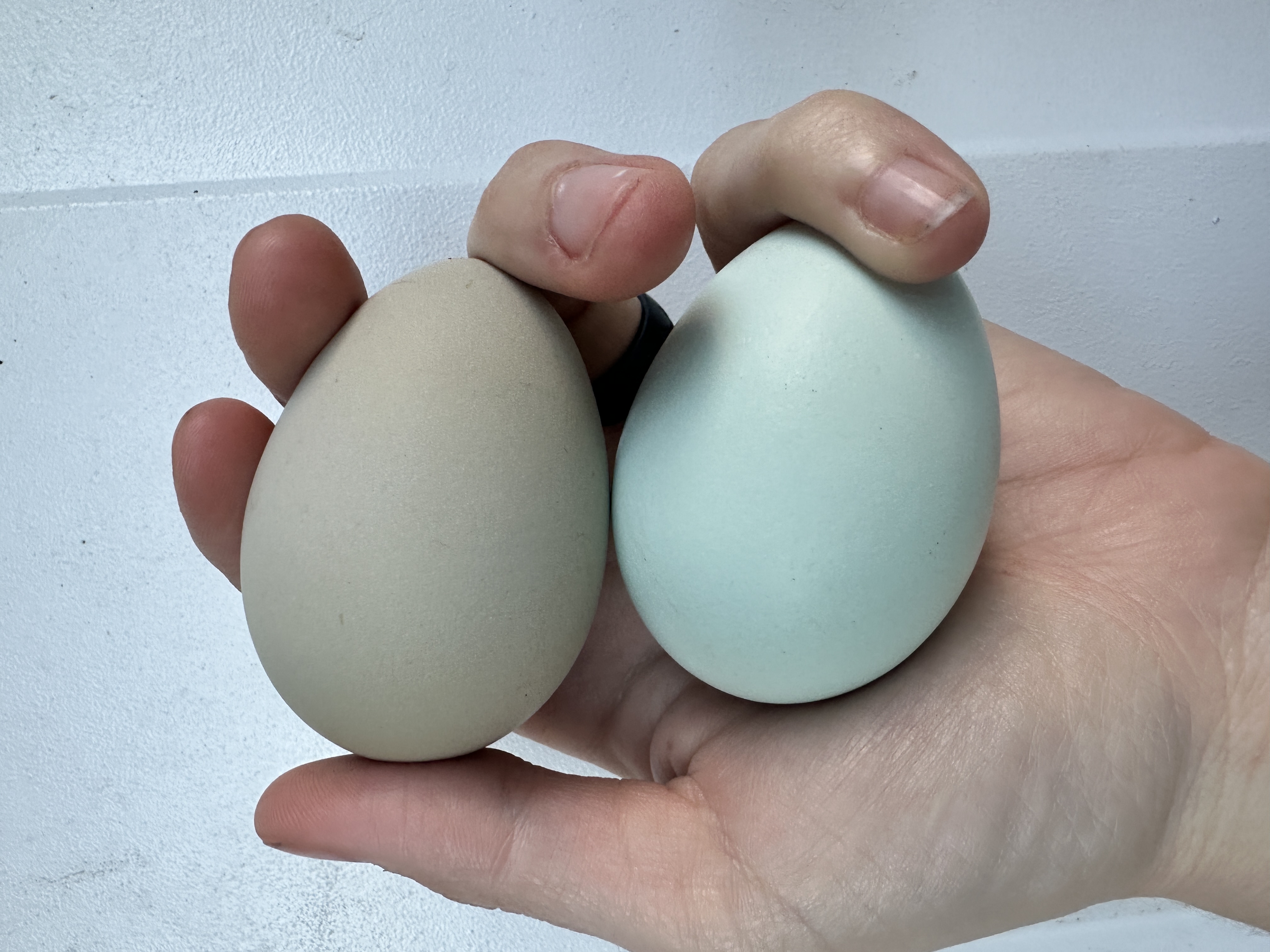
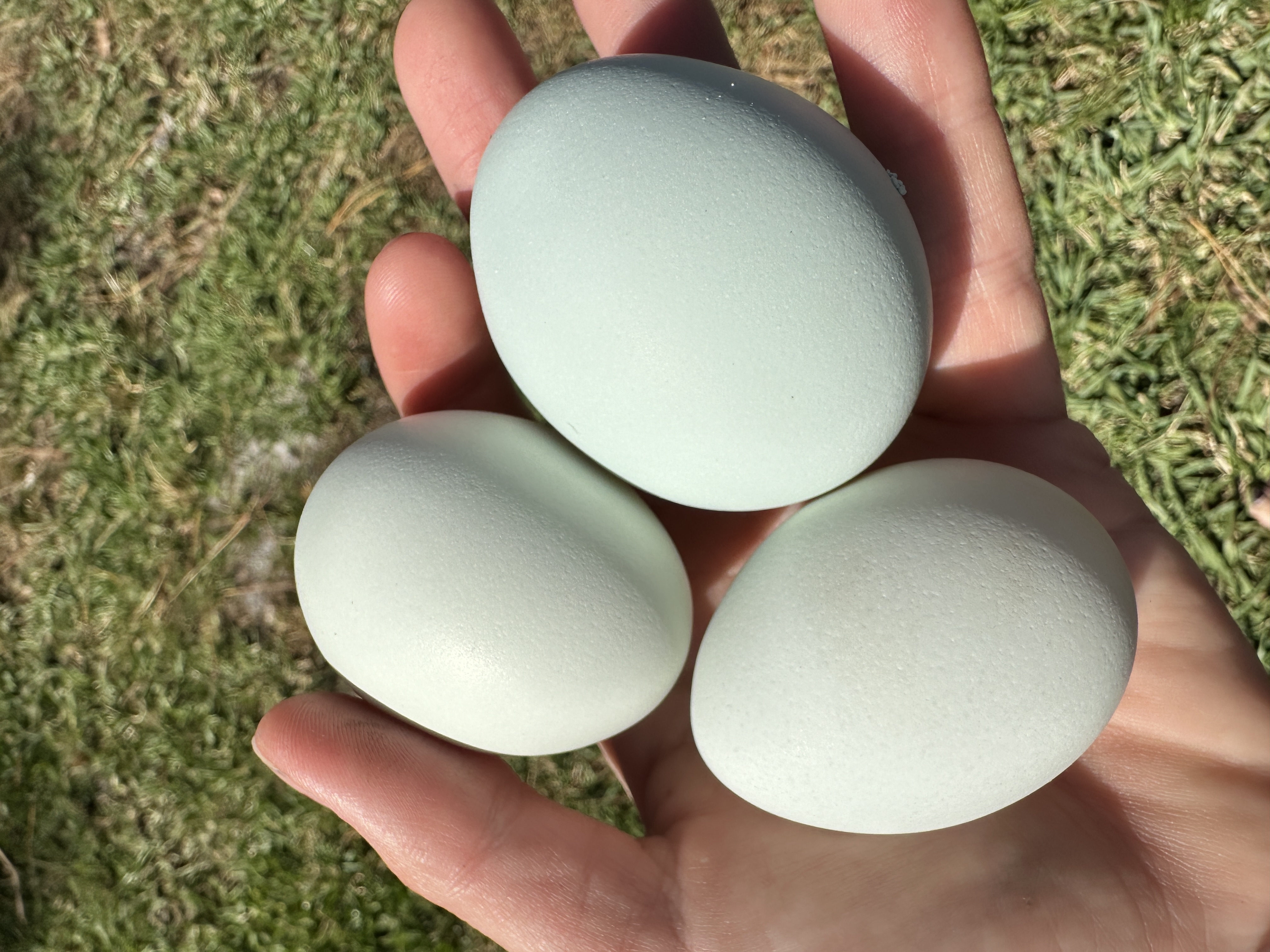
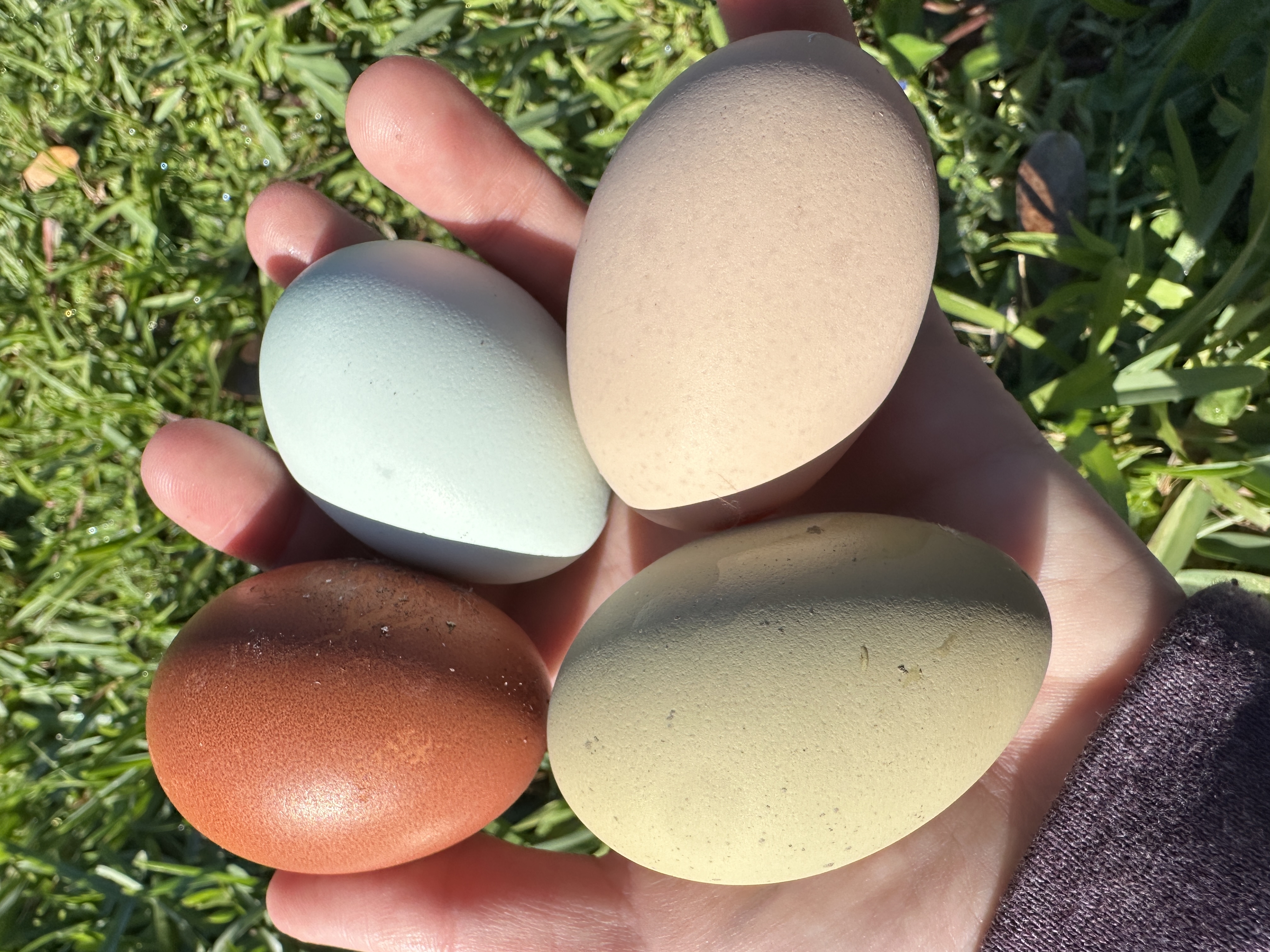
From our nest to yours, every life starts long before hatch day
At Little Haven Homestead, hatching eggs don't begin in the incubator. They begin long before they are ever laid.
Healthy chicks start with well cared for birds, balanced nutrition, clean environments, and thoughtful breeding.
Strong shells, stable air cells, and viable embryos are all built inside the hen. Incubation supports life, it does not create it.
When you receive eggs from Little Haven, you are getting the result of that entire process.
* * *
Before You Even Set Your Eggs
Let them rest and come to temperature
If your eggs were shipped, gently unpack them and place them pointy side down.
Allow them to rest and slowly come to room temperature for about 12 to 24 hours before setting.
This helps the air cell settle after shipping and prevents temperature shock.
Storage basics
If you are not setting immediately, store eggs around 55 to 65F, large end up, in a slightly humid environment,
and for no more than about 7 to 10 days when possible. Avoid refrigeration.
It is too cold and can damage viability.
* * *
The Little Haven Incubation Method
After hundreds of eggs and many hatches, this is the method that has worked best here.
Incubation Phase
Temperature99.8F
Humidity45%
Turn eggs several times a day or use an auto turner
If using an auto turner, make sure it is actually on
Lockdown Phase
Temperature98.9F
Humidity55%
Final 3 days
Stop turning completely
* * *
Positioning Your Eggs
This is one of the most important and most overlooked parts of incubation.
Preferred method
I strongly prefer incubators that keep eggs pointy side down.
This keeps the air cell where it belongs and helps chicks position correctly for hatch.
If your incubator does not support this
You still have good options. Use an egg carton inside the incubator and keep eggs pointy side down while turning them yourself several times a day,
or lay eggs on their sides in an automatic turner. They will usually still hatch, but in my experience you may see a slightly lower hatch rate.
Why position matters
The biggest issue comes down to the air cell. The air cell forms at the large end of the egg and is where the chick takes its first breath before hatching.
If the egg is positioned wrong or the air cell is unstable, it can lead to malpositioned chicks, trouble internally pipping, and late stage losses.
Keeping eggs pointy side down gives them the best chance to line up correctly for hatch.
* * *
Turning Your Eggs
Turning is essential for proper development. Turn eggs several times a day or use an auto turner.
Always double check that your turner is actually running. Stop turning completely at lockdown.
Consistency matters more than perfection.
* * *
The Hatch Window
Chicken eggs typically hatch around day 21.
Stage One
Days 1 through 18
Steady temperature and humidity
Regular turning
Optional candling around day 7 and 14
Stage Two
Day 18
Stop turning
Lower temperature slightly
Increase humidity
Keep the incubator closed as much as possible
Stage Three
Days 19 through 21
This is the hardest part. Chicks will begin to pip and hatch, and it can be very tempting to open the incubator. Try not to.
It is completely okay to leave chicks in the incubator for up to 48 hours while the rest finish hatching and drying off.
They may peck at each other or stir things up. This is normal and can actually encourage others to hatch.
Opening the incubator, even briefly, can drop humidity and lead to chicks getting stuck.
* * *
Need Help?
If you feel like your chicks are stuck or you are unsure what to do, do not hesitate to reach out to me.
You're family now. The good kind, not the kind that abandons you or judges you lol.
I am always happy to help walk you through it.
* * *
A Note on Shipped Eggs
We have tried many different shipping methods over time and are always working to improve.
If any eggs arrive broken, please let us know.
While we cannot replace every single egg, if there is catastrophic damage during shipping,
take clear photos right away and send them to us as soon as possible. We will do our best to get replacement eggs to you when possible.
We do not offer refunds.
You can request UPS or USPS shipping when ordering. If no preference is given, we typically choose UPS for the best overall results.
Once eggs leave our hands, we cannot control delays or handling during transit.
However, photos of damage help us file claims so we can work toward making things right.
* * *
DNA Sexing Your Chicks
We also offer DNA sexing and this is one of the best times to collect samples. Right out of the incubator is ideal.
How to collect
Remove chick from the basket
Band your chick so you can keep track
Clip a small amount from the nail for your DNA sample
Place the sample into its own labeled baggie
Once the sample is secured, move the chick into the brooder
Before moving on to the next chick, clean your clippers well with rubbing alcohol to prevent cross contamination
Every egg is produced with intention, care, and a focus on strong, healthy birds.
From nutrition to collection to handling, every step matters.
Once they leave us, we are always here to help guide you through the rest of the process.